
Accelerating Research Translation
Seed Translational Research Projects (STRP) Program
The Seed Translational Research Project (STRP) program aims to turn research into real-world solutions that make a difference by applying and scaling research outcomes in practical ways. Projects in the STRP program can include:
- Developing tools, services, or programs that solve real problems;
- Partnering with high-impact organizations or businesses to co-design, co-refine, implement, and/or scale innovative solutions;
- Creating university programs that offer data, science-based services or training to communities, organizations, or individuals;
- Starting a business or nonprofit.
Faculty are invited to submit proposals for the STRP program. Click the button to view the Fall 2026 Call for Proposals and learn how to submit your proposal.
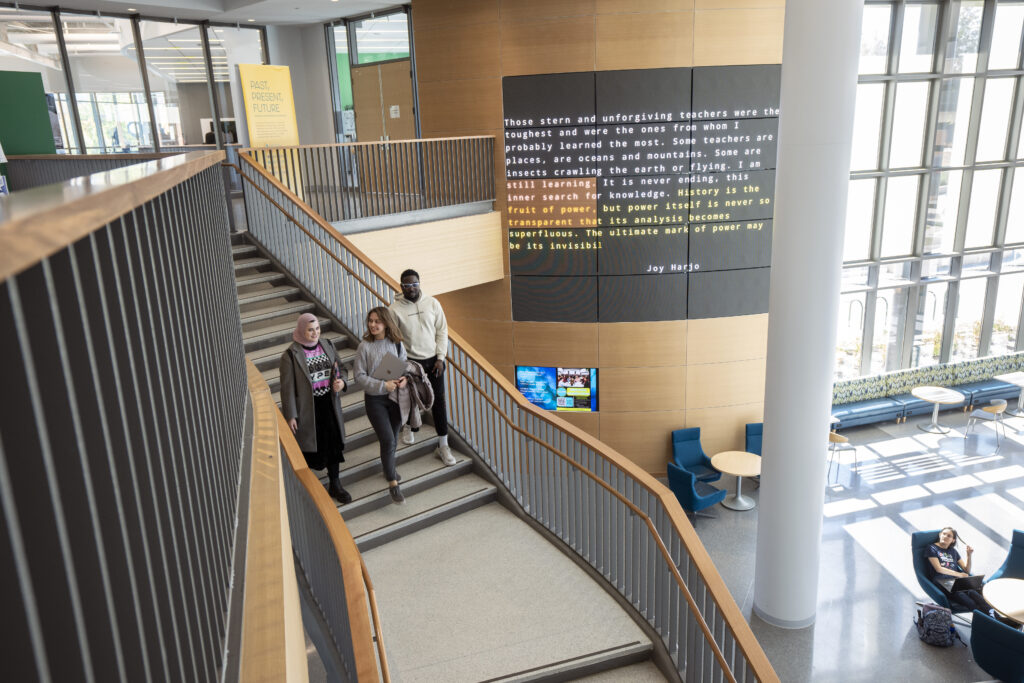
Projects under the STRP program are completed over a 12-month period. Explore current and past projects to learn more about how George Mason faculty are translating research into real-world applications.
Spring 2026
Composite Material for Winter Footwear Outsoles
Dr. Shaghayegh Bagheri
Dr. Bagheri’s project focuses on the development of innovative composite material for winter footwear outsoles designed to deliver durable slip resistance and enhanced safety on icy and low-friction surfaces. The project aims to bridge the gap between laboratory research and commercial application by advancing the formulation, processing, and bonding performance of novel thermoplastic polyurethane (TPU)-based composites. Specifically, it seeks to optimize material composition and manufacturing parameters so that the resulting outsole material can be seamlessly integrated into existing footwear production lines with minimal tooling or process modification. By demonstrating strong adhesion to outsole rubber substrates and maintaining mechanical flexibility in cold environments, the research will establish a pathway toward scalable, industry-ready materials.

SonoTrak: Improving Detection of Underlying Neuromuscular Dysfunction
Dr. Parag Chitnis
Current musculoskeletal rehabilitation tools fall short in detecting the underlying neuromuscular dysfunctions that persist long after initial injury. SonoTrak addresses a critical gap in musculoskeletal rehabilitation by introducing a wearable musculoskeletal ultrasound system capable of real-time, multi-muscle imaging during dynamic movement. Dr. Chitnis’s STRP will focus on the iterative refinement of both hardware and software components of the SonoTrak system. On the hardware side, the project will enhance the real-time signal processing capabilities to ensure accurate and responsive imaging during dynamic movement. Concurrently, the user interface will be redesigned based on structured feedback from clinicians to improve clarity, usability, and workflow integration.
Molecular Imaging Probes: Unique platform to decode LOX Crosslinking in Tissue Repair, Disease and the Tumor Microenvironment
Dr. Ozlem Dilek
Dr. Dilek’s project will develop small-molecule fluorescent probes for real-time detection of allysine, a key marker of lysyl oxidase (LOX)–mediated extracellular matrix remodeling. Using click chemistry, the project will design and synthesize hydrazine-based probes that react selectively with allysine to produce bright, turn-on fluorescence, while zinc coordination red-shifts emission into the NIR region to enhance live-tissue imaging. This technology would offer a paradigm shift in how we study tissue remodeling and extracellular matrix (ECM) dynamics, opening the door to directly observing the cellular “construction sites” of development, repair, and disease. This would unlock entirely new biological insights into fibrosis, cardiovascular disease, cancer metastasis, and tissue regeneration, and enable early, non-invasive diagnosis of matrix-related pathologies. By making LOX crosslinks visible, the team can identify previously unknown checkpoints of disease progression and therapeutic response. Moreover, the cross-disciplinary reach of this platform — spanning synthetic chemistry, computational, optical imaging, regenerative medicine, and oncology — ensures broad scientific impact. This technology could catalyze new research directions across diverse biomedical fields and inspire next-generation tools for dynamic tissue biology. With STRP support, Dr. Dilek and her team will deliver a first-in-class imaging tool that stands to redefine ECM biology and ultimately, how we understand and treat some of the most intractable human diseases.
Interdisciplinary NASA MUREP ESSR Integrated Hazard Institute
Dr. Lucas Henneman
Dr. Henneman’s project explores ways that National Aeronautics and Space Agency (NASA) Earth Observations data and tools can be leveraged to identify air pollution sources and assess community air pollution exposure in Virginia communities. Funding provided by NASA, award #80NSSC25M0077.

Cemeteries as Community Archives for Cultural Heritage Preservation
Dr. Michelle Lafrance
Often overlooked yet vital to understanding community history, small and hidden cemeteries reveal under-documented narratives of local settlement, cultural transformation, regional development, and issues of environmental impact and sustainability. Dr. LaFrance’s project will translate transdisciplinary rhetorical research into applied and community-beneficial tools that support local preservation organizations, neighborhood associations, public historians and cultural resource managers who work to document, interpret, preserve, and share community histories for community memory and planning purposes.
Batteryless IoTs for Ubiquitous Sensing and Connectivity in Smart Factories and Warehouses
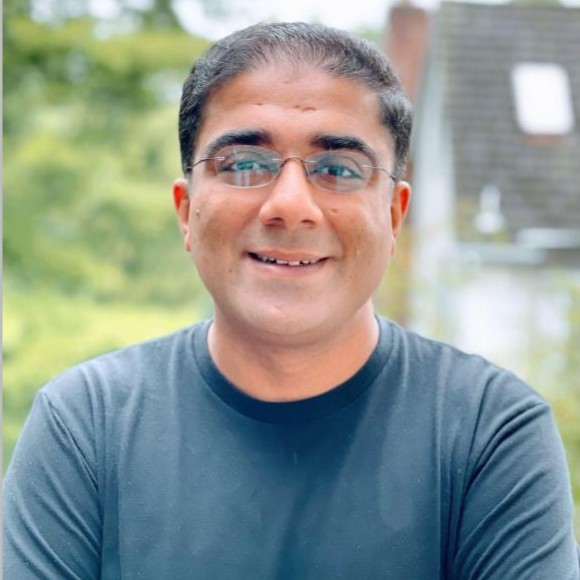
Dr. Parth Pathak
Approximately 60% of today’s Internet of Things (IoT) devices use non-rechargeable batteries. With each device requiring a battery change every 1-2 years, replacing batteries is prohibitively expensive, and recycling or discarding the dead batteries is not sustainable. To address the shortcomings of existing IoT wireless techniques and protocols, Dr. Pathak’s team has developed a novel batteryless IoT solution, referred to as mmID (analogous to RFID but operating at millimeter-wave frequencies). The objective of Dr. Pathak’s STRP is to extend the team’s research on batteryless mmID IoTs into real-world applications of smart warehouses and factories to better understand the research and implementation gaps and evaluate product adaptations for application domain-specific requirements.

Wearable Aptamer Biosensor for Real-Time Estradiol Monitoring
Dr. Jenny Phan
Current methods monitoring hormones such as estradiol (E2) remain invasive, expensive, and impractical for continuous monitoring, yet E2 plays a fundamental role in cognitive function, bone density, cardiovascular health, mood regulation, and pain perception. Dr. Phan’s team is developing a non-invasive, wearable aptamer-based electrochemical biosensor that detects E2 in saliva with high specificity and sensitivity. This innovative intraoral sensor enables accessible, real-time E2 tracking without blood draws or lab processing by integrating recent aptamer advances with established electrochemical sensing. Dr. Phan’s STRP will optimize the sensing technology and de-risks the proof-of-concept through validation of technical performance, clinical utility, and user acceptability.

Belief Bridge
Dr. Amira Roess
Many companies have adopted workplace wellness programs, but the results have often been underwhelming, with low engagement, limited behavior change, and inconsistent return on investment. Dr. Roess’s STRP will develop and validate a prototype framework for Belief Bridge, a psychographic engagement platform designed to fill the critical gap between wellness program design and employee behavior. The project will leverage the team’s machine-learning psychographic segmentation modeling, using tested algorithms to assign individuals to psychographic segments based on their health risk perceptions and efficacy beliefs; key psychological variables known to influence health behavior and information seeking.
AguaClara PF250
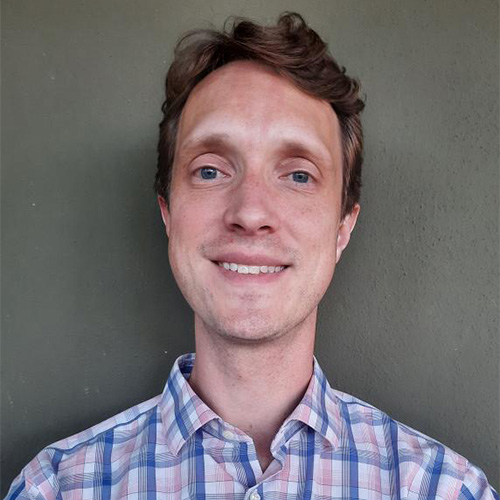
Dr. Daniel W. Smith
The AguaClara PF250 is a hydraulic, prefabricated drinking water treatment plant that is designed to make very dirty surface water safe to drink out of the tap entirely without electricity. Dr. Smith’s STRP aims to refine the understanding of which communities can operate and benefit from this new low-cost, open-source technology and then test and improve the solution with feedback from communities. These activities will contribute to developing a strategy with project partners to expand safe water access in rural Puerto Rico and small water systems across the USA.

Forecasting elevated-temperature landfill conditions
Dr. Kuo Tian
Dr. Tian’s STRP will develop and test a predictive method for forecasting the onset and evolution of elevated-temperature conditions in municipal solid waste (MSW) landfills. Elevated-temperature conditions in MSW landfills lead to the challenges that cost hundreds of millions of dollars per site to remediate. Despite growing recognition of this problem, there is currently no validated framework for early detection, mechanism identification, or effective mitigation tailored to site-specific waste composition and hydrothermal conditions. State agencies and landfill operators need practical, data-driven tools to predict, monitor, and manage thermal reactions before they escalate into severe events. This STRP will use machine learning methods to analyze historical and real-time monitoring data to identify early warning signals.

AI-based Lighting Tools for Content Creation
Dr. Jinwei Ye
The hurdles for high-quality visual production revolve around lighting, which is arduous to set up at the capture time and hard to change or edit in postproduction. Dr. Ye’s STRP will overcome this challenge by developing a suite of intuitive tools for lighting-coherent image and video editing. The project will bring together research breakthroughs in computer vision/graphics, computational imaging, and artificial intelligence (AI) to develop novel neural networks and train artificial intelligence models for lighting-coherent image or video manipulation. This technology will allow users to change the lighting conditions of an image or video and combine composite components from footage captured in separate shootings with consistent lighting effects.
Spring 2025

Sustainable Infrastructure Materials
Dr. Emma Zhang
Critical infrastructure near the coastline faces heightened risks from corrosion and water erosion, posing serious threats to the well-being and resilience of coastal communities. Dr. Emma Zhang’s project translates the research on sustainable civil engineering materials into both educational settings and practical applications throughout her participating civil engineering courses and partnerships with Virginia communities.
Fall 2024

Transportation and Human Mobility
Dr. Alireza Ermagun
Extreme weather events exert profound stress on transportation systems by shutting down portions of the network, rendering facilities temporarily inaccessible or difficult to access, and directly affecting users such as pedestrians, cyclists, and transit riders. Dr. Alireza Ermagun’s project translates research to better understand human mobility disruption events and assess adaptation strategies.
Spring 2024

Flood Hazard Engineering and Adaptation
Dr. Celso Ferreira
As part of Dr. Celso Ferreira’s project, civil engineering students are working with Virginia communities to analyze localized flood risk and support the creation of flood resilience strategies. Project activities were crafted to reshape workforce development to a user-centered engineering modeling focus and students apply their learned skills with new models to create tailored case studies based on each client’s unique needs.
Local Micrometeorological Modeling for Urban Heat
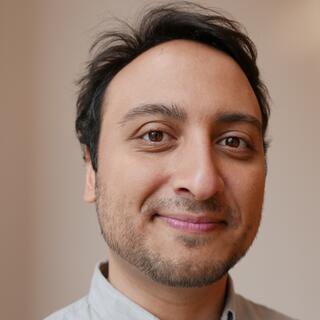
Dr. Luis E. Ortiz
George Mason University professor Dr. Luis Ortiz and his students are collaborating with Virginia cities to assess the risks posed by urban heat islands and co-develop effective solutions. Students apply the fundamental concepts of urban heat islands, the subsequent impacts, and atmospheric modeling skills that are then applied to a community project in Virginia.